
Your First DTLA Grocery Run: A Practical Neighborhood Strategy
The first grocery run after moving to Downtown Los Angeles is less about finding the biggest store and more about learning the route you will genuinely repeat. In DTLA, a useful food routine depends on distance, crossings, carrying capacity, building access, and what you can do on the same trip.
## Start with the trip you actually need
Before choosing a market, make a short list for three days rather than a full week. Pick breakfast basics, one easy dinner, snacks, and anything you need for the next morning. A smaller first load lets you test the route without turning the outing into a logistics problem.
Begin at your building entrance and measure the real walk, not the map distance. Notice the easiest crossing, the sidewalk with the most room, and whether your return route works with two bags. In a loft or high-rise, also check where deliveries and groceries enter the building. These small details determine whether a store becomes part of your routine.
## Match the market to your neighborhood
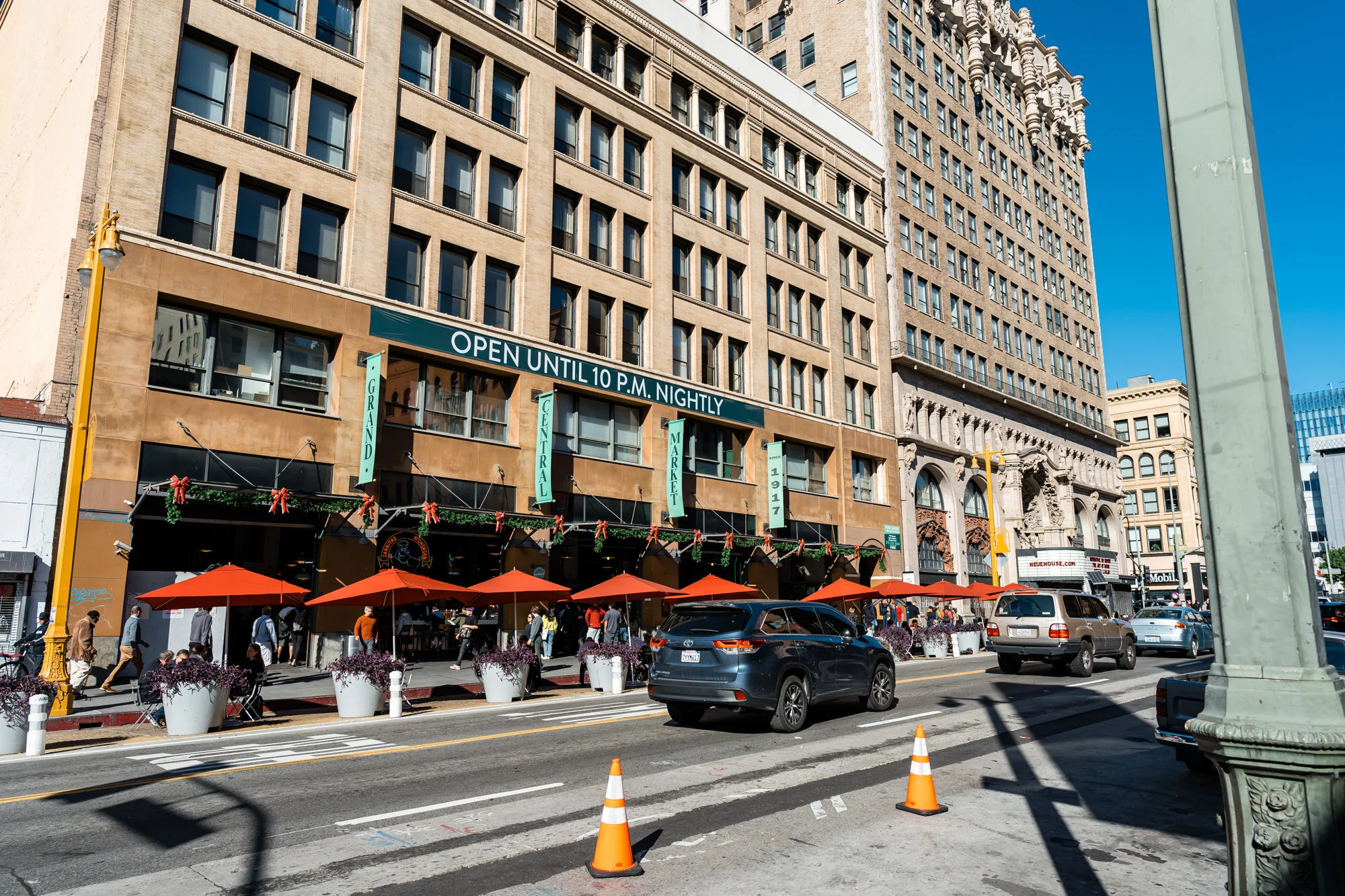
Different parts of DTLA support different errand patterns. Residents near the Historic Core may combine a market stop with Grand Central Market, coffee, or a Broadway walk. Little Tokyo offers a compact food-and-shopping loop. South Park residents may prefer a route that combines groceries with Metro, the arena district, or a nearby pharmacy. In the Arts District, a short walk can connect food shopping with coffee and dinner plans.
The best option is not always the store with the largest selection. It is the one that fits your normal week: close enough to walk, easy to reach by Metro, open when you need it, or convenient to combine with another trip.
## Test the return, not just the trip out
On your first run, buy only what you can comfortably carry. Walk home at the time you normally shop and pay attention to heat, shade, traffic, and crowded corners. If the route feels difficult with a few items, it will not become easier with a full basket.
Keep a backup plan for larger shops. A folding cart, backpack, short rideshare, or delivery order can make a weekly stock-up practical while you keep smaller purchases local. The goal is a flexible routine, not a rule that every errand must be done the same way.
## Build one useful loop
Once you find a workable market, add one nearby task: pharmacy items, household supplies, coffee, or a meal. A single loop saves time and helps you learn your immediate DTLA radius. Try the route on a weekday and on a weekend because storefront activity, parking, and pedestrian traffic can change noticeably.
Keep a note of three things after each trip: what you bought, what was inconvenient, and what you would change next time. After two or three runs, you will know whether your best routine is a daily top-up, a weekend stock-up, or a combination of both.
## Bottom line
A good DTLA grocery routine is built from repeatable details: a manageable list, a realistic walking or Metro route, a comfortable way home, and one nearby errand that makes the trip worthwhile. Test the route with a small purchase, adjust for your building and neighborhood, and let convenience—not a generic recommendation—decide where you shop.